
1. Introduction
The month of December focused on strengthening critical support infrastructure for the Feathers of Hope (FOH) Model Farm and the surrounding community. The key interventions implemented during this period were aimed at enhancing environmental conservation and water accessibility, which are core pillars of FOH’s sustainability and community empowerment agenda. The main activities carried out were the setting up of the tree nursery shed net and the arrival of the final batch of piping materials for the water piping project from the water pan to the FOH farm and the community water point
2. Setting Up of the Tree Nursery Shed Net
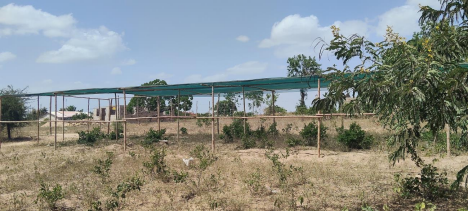
During the reporting period, FOH successfully set up a tree nursery shed net within the model farm.
Activities Undertaken:
∙ Installation of the tree nursery shed structure.
∙ Fixing of shade nets to protect young seedlings from excessive sunlight, heavy rainfall, and pest damage.
Purpose and Relevance to FOH:
∙ To support FOH’s environmental conservation and climate-smart agriculture initiatives. ∙ To provide a conducive environment for raising strong and healthy tree seedlings. ∙ To support future tree planting activities within the FOH farm and the wider Kinango community.
Expected Outcomes:
∙ Improved survival rate and quality of tree seedlings.
∙ Increased capacity for FOH to supply seedlings to community members and farmer groups. ∙ Enhanced environmental awareness and conservation practices among beneficiaries.
3. Arrival of Final Piping Materials for the Water Piping Project
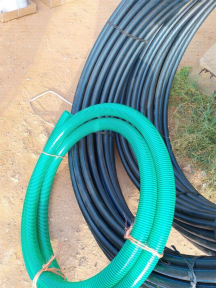
FOH also achieved a major milestone with the arrival of the final batch of piping materials required for the water piping from the water pan to the FOH farm and the community water point.
Activities Undertaken:
∙ Proper storage and organization of the materials in readiness for installation. ∙ Final planning for the upcoming installation phase.
Importance to FOH and the Community:
∙ To ensure reliable and sustainable water supply for FOH farm operations, including poultry, tree nursery, and general farming activities.
∙ To improve access to water for the surrounding community through the community water point.
∙ To reduce the burden of water collection, particularly for women and children. ∙ To enhance productivity and sustainability of FOH projects.
Expected Outcomes:
∙ Completion of water piping from the water pan to the FOH farm.
∙ Operationalization of the community water point.
∙ Improved water security for both farm and community use.
4. Organic Farming Activities: Crop Performance Observations
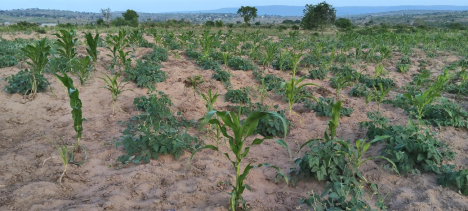
As part of FOH’s commitment to organic and climate-smart farming, crop trials were conducted on the farm during the reporting period. These trials aimed at identifying resilient crops suitable for the local climatic conditions of Kinango.
Crops Grown:
∙ Maize
∙ Green grams (Ndengu)
∙ Cowpeas
Observations:
Maize crop showed poor performance and eventual failure, mainly due to insufficient rainfall during the growing period. Maize requires consistent and adequate rainfall, which was not experienced during the season.
∙ Green grams and cowpeas performed well, demonstrating strong resilience to low rainfall conditions.
∙ The leguminous crops adapted better to the prevailing weather conditions and showed healthy growth under organic farming practices.
Lessons Learned:
∙ Reliance on maize alone is risky in areas experiencing unreliable rainfall. ∙ Drought-tolerant and short-season crops such as green grams and cowpeas are more suitable for the FOH farm’s and entire Kinango climatic conditions.
∙ Organic farming practices can be successful when combined with appropriate crop selection.
Action Taken – Adoption of Mixed Farming:
Based on these observations, FOH opted for mixed farming as a strategic response to climate variability. This approach allows:
∙ Reduced risk of total crop failure.
∙ Improved soil fertility through leguminous crops.
∙ Diversification of farm produce for both household consumption and income generation. 4. Conclusion and Way Forward
December marked an important step in strengthening FOH’s infrastructure and long-term sustainability. With the tree nursery shed net successfully set up and all piping materials fully delivered, FOH is now well positioned to move into the next implementation phase.
Way Forward:
∙ Commence installation of the water piping system from the water pan to the FOH farm and community water point.
∙ Begin active propagation of tree seedlings in the nursery.
∙ Continue integrating environmental conservation and mixed croping with poultry and farm activities for holistic community impact.
∙ Escalating the mixed farming to the farmers nearby and also to the farmer groups
Prepared by Constatine Charo Tsuma
FOH project Manager